Why Shipping Containers Have a Standard Shape
Why shipping containers have a standard shape: see how shared dimensions help ships, trains and trucks exchange cargo with fewer handling changes.
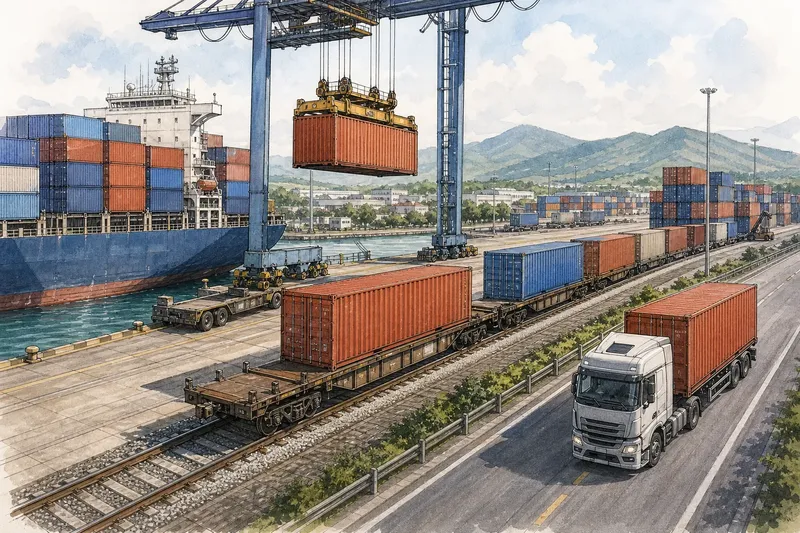
Why shipping containers have a standard shape becomes clear when a box moves from a ship onto a train: the same frame can be lifted, secured and carried onward without unpacking its contents. Standard dimensions make those transfers easier to organise, although they do not make every container or every journey identical.
Shared dimensions
Most familiar freight containers are rectangular steel boxes built to recognised international dimensions. The common exterior lengths are twenty feet and forty feet, with standardised width and height options. Those sizes let carriers, ports and equipment planners work from shared assumptions rather than designing a new arrangement for each shipment.
The container’s shape is practical, not decorative. Flat sides and a rectangular footprint let units sit in orderly rows aboard ships and in stacks at terminals. Corner castings—reinforced fittings at the container’s corners—give cranes and securing equipment consistent points to grip or lock. The fittings matter as much as the outline: a rectangle without standard lifting and locking points would be a much less useful rectangle.
Standard size does not mean unlimited interchangeability. A unit’s type, condition, permitted load and route requirements still matter. Refrigerated containers need power connections; open-top units suit cargo that will not fit through standard doors; tank containers carry liquids in a different inner vessel. The shared framework organises variety rather than erasing it.
Three transport modes
Standard containers are designed to cross transport modes with their cargo inside. At a port, a ship-to-shore crane can lift a unit from a vessel and place it on a terminal chassis or rail wagon. At a rail yard, suitable lifting equipment can transfer it again, or a purpose-built train can carry it directly. A road tractor then takes a container to a depot, warehouse or customer’s site.
Each change of mode needs coordination. The crane, spreader, chassis, wagon and securing points must be compatible with the container and the terminal’s operating arrangements. A standard footprint helps equipment and storage plans align, but local procedures, available machinery and route restrictions still shape what can be handled.
Think of a container like a stackable storage box made for several shelves: its common outside form lets different systems hold it, while the contents remain undisturbed. The analogy has limits. Freight containers are heavy units subject to lifting, load and securing requirements, not household boxes that can be moved wherever they fit.
What standardisation changes
Without shared dimensions, a transfer might require cargo to be unloaded from one vehicle and repacked for the next. Keeping goods inside a compatible container can reduce those extra handling stages. It also allows operators to plan ship stowage, rail capacity, road equipment and terminal space around recognisable unit sizes.
Standardisation also supports planning across companies. A shipping line, port operator, rail carrier and haulage firm can coordinate around a container’s type and size even when they do not operate the same equipment. In practice, the plan still depends on advance information: the receiving terminal must be able to accept the unit, and the onward carrier must have room and suitable equipment.
Say a fictional importer has a container of packaged tea arriving by ship, with a rail connection to an inland terminal and a road collection arranged from there. If the unit’s dimensions and type fit each leg, the cargo can remain inside while the container changes carriers; the observable result would be a transfer record showing the same unit handed from one transport mode to the next, rather than separate cargo packages being loaded at each stage. If the rail wagon or local access cannot accommodate it, the plan needs a different route or handling arrangement.
Limits of a common form
A standard container is only one part of a transport chain. It does not establish that a route has capacity, that a port has a suitable crane, or that a particular road can accommodate the vehicle carrying it. Nor does a standard external shape mean every cargo fits safely inside. The goods must suit the container’s internal space, loading method and permitted payload.
Container dimensions also interact with local infrastructure. Bridges, tunnels, road rules, rail clearances and terminal layouts can constrain which combinations of container, chassis and vehicle are usable. Carriers check these constraints when planning a movement; the box’s standard form makes coordination possible, but it cannot remove physical limits.
There is also a distinction between the container’s own weight and the weight of its contents. The total loaded unit must remain within the relevant limits for the container and each mode of transport. A container that is acceptable on one leg may still need a different arrangement for another, depending on equipment and local rules.
Choosing a container type
The standard dry container is the familiar enclosed box for goods that can travel without controlled temperature. Other designs retain a broadly compatible external framework while changing how cargo is carried or accessed:
- Refrigerated container: used for temperature-sensitive cargo, with an operating connection and handling plan needed along the route.
- Open-top container: useful when cargo is loaded from above or will not pass through the doorway, subject to suitable covering and lifting arrangements.
- Flat rack: has an open platform and end structures for cargo that exceeds the space of a closed box, with securing and route checks required.
- Tank container: carries liquid or gas in a tank held within a supporting frame, and calls for cargo-specific handling arrangements.
These are not merely different labels for the same box. A trader or logistics planner needs to match the unit to the cargo, equipment, journey and receiving facilities. The container’s standard external interfaces help it join the transport network; its specialised features determine whether it suits the goods.
Questions about standard containers?
Who sets container dimensions?
International standards define widely used freight-container dimensions and related features, while industry practice and equipment requirements shape how they are applied. For a particular shipment, the carrier’s accepted equipment specifications are the practical reference.
Are all shipping containers the same size?
No. Common lengths include twenty-foot and forty-foot units, and containers also vary in height and purpose. Confirm the actual unit type and dimensions rather than assuming that the word “container” identifies one universal size.
Why do corner castings matter?
Corner castings provide standard points for lifting, stacking and securing a container. Their position lets compatible spreaders and locking equipment engage the unit without gripping its thin side panels.
Does a standard container fit every truck and train?
No. The container may be standard while the carrying equipment, route clearances and terminal facilities differ. Transport planners must check compatibility for each leg rather than treating the shared shape as permission to use any vehicle.
Reading the network
Why shipping containers have a standard shape is ultimately a question about coordination: common dimensions and corner fittings let separate transport systems work with the same cargo unit. When comparing a shipping route, look beyond the box itself to the transfers, equipment and facilities that connect its legs. That is where the practical limits of standardisation become visible.