Before the Container: The Long Story of the Port
The history of ports shows how shelter, storage and rules turned landing places into exchange hubs, clarifying why ports shape trade beyond the shoreline.
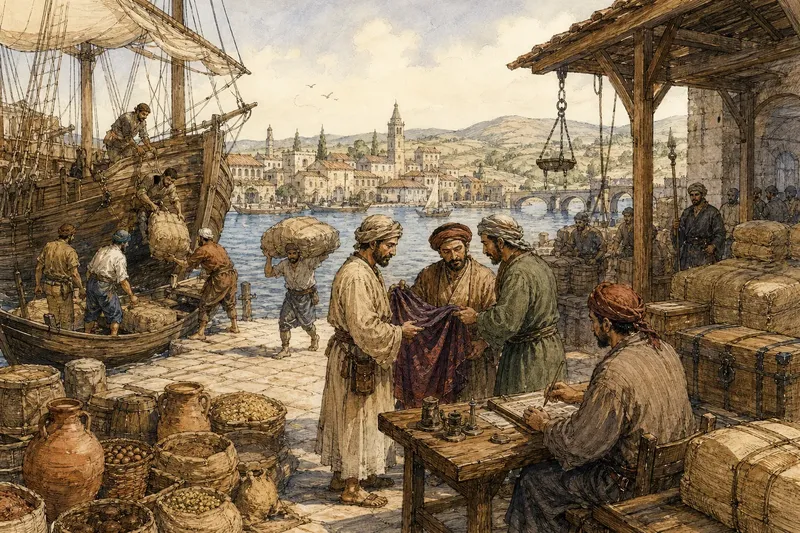
A port’s history begins with a practical problem: how to bring a vessel alongside without losing its cargo to the sea. The history of ports is also the history of how people turned a safe landing into a working link between ships, shore communities and inland markets.
Before standardised cargo units and modern cranes, exchange depended on people finding safe water, bringing goods ashore, protecting them from weather, establishing ownership and connecting them to buyers. Ports grew as these tasks became organised, and their changing roles reveal how trade was reshaped.
From shelter to settlement
A sheltered cove gave a ship somewhere to wait, unload or take on supplies with less exposure to wind and waves. But shelter alone did not make a port. Nearby residents needed reasons to trade, while visiting crews needed access to fresh water, food, repair materials or a route towards inland markets.
In some places, a beach or riverbank served as a landing. Elsewhere, a natural harbour offered deeper water and protection from rough conditions. A quay or simple landing stage made loading easier, but a regular meeting point could become a recognised place of exchange even without permanent structures.
Local knowledge mattered. A pilot familiar with a river mouth could guide vessels past shifting shallows; a fisherman might know where a boat could anchor safely. Those who supplied such knowledge were part of the port’s working arrangements, though they would not have described them in those terms.
Repeated arrivals gave traders, boat repairers, carriers and food sellers reason to remain nearby. The landing place became less a point on the shore and more a settlement where different kinds of work met.
Goods change hands
Moving goods from ship to land was only one part of a port’s purpose. Cargo might be sold locally, stored until a buyer appeared, transferred to another vessel or sent inland by pack animal, cart or river barge. Each option required people to agree on ownership, quality, delivery and payment.
These arrangements could matter as much as the landing itself. A merchant arriving with timber, salt or grain needed a way to find customers and judge what goods were worth. Market customs, brokers and trusted local contacts helped bridge the gap between visitors and residents. In busy ports, specialised sellers and craftspeople made exchange more predictable.
Storage changed the timing of trade. If goods could be kept under cover, a merchant did not have to sell everything as soon as a vessel arrived. Warehouses, sheds and guarded storehouses gave cargo time to wait for a buyer or a suitable onward journey. They also raised practical questions: who held the keys, who bore the risk of damage, and which goods could be released?
Say a merchant arrives at a sheltered river port with dyed cloth, but local demand is limited. A warehouse keeper agrees to store the bales, and a broker introduces the merchant to a trader who regularly sends goods upriver. The expected result is a longer chain of exchange rather than an immediate sale; storage and local contacts make that option possible.
Rules at the waterfront
As exchange grew, ports became places of authority. Rulers and states had reasons to monitor arrivals, collect duties and control access to valuable goods. Customs officials, toll collectors and harbour authorities could turn an informal landing into a regulated gateway.
Rules did not simply slow trade. They could establish common procedures for declaring cargo, settling disputes and paying charges. Merchants might prefer a port where obligations were known to one where access depended on unpredictable demands. Duties and restrictions could also redirect traffic to a neighbouring harbour or encourage smuggling. Administration shaped commercial choices even when the official aim was revenue or political control.
Ports carried information as well as goods. A ship’s arrival brought news of prices, political changes, weather and demand elsewhere. Brokers and merchants passed such knowledge along, sometimes quickly and sometimes through a cautious chain of intermediaries. The harbour was a listening post as well as a loading point.
That information could influence which cargoes were bought and where they travelled next. A port with dependable connections might attract traders seeking news as well as goods. A market works better when its participants have some knowledge of their alternatives.
Connections inland
A port’s influence rarely ended at the shoreline. Roads, rivers and canals carried goods towards towns, farms and workshops, while inland products travelled in the other direction. The port joined maritime routes to local networks; its value depended partly on how well those networks connected.
This helps explain why a naturally excellent harbour might remain modest while a less sheltered site grew into a major trading centre. A port near productive hinterland, political authority or a busy route could attract more traffic than a safer inlet with few links beyond the coast. Geography supplied possibilities, but infrastructure and institutions determined how much use people could make of them.
Transport inland also shaped cargo handling. Heavy or bulky goods were difficult to move far over poor roads, so merchants had reason to favour waterways where available. Smaller, valuable goods could travel by other means. Port workers and merchants adapted their arrangements to the cargo, the route and the buyers waiting beyond the waterfront.
Ports could bind distant communities together without making them alike. A place might export local produce, import tools and materials, and redistribute goods that had arrived from farther away. Its character came from these overlapping roles, not from a single trade.
Labour behind exchange
Trade at a port depended on labour that is easy to overlook in accounts centred on merchants and ships. Dock workers, lightermen, porters, boatmen, tally clerks, guards and repairers all helped cargo move. Their work turned a vessel’s arrival into a sequence of practical tasks.
Before mechanical handling, goods were often carried, rolled, lifted with simple tackle or transferred between vessels and shore using smaller boats. The method depended on the cargo and available facilities. Fragile goods needed careful handling; heavy goods required suitable equipment and enough people. A port’s capacity was shaped by working arrangements as much as by its anchorage.
Labour also connected the port to nearby households and trades. Food sellers supplied crews; carpenters and rope-makers supported vessels; carriers moved goods towards markets. When trade changed, these occupations could change with it. A port was an economic district, not merely a line where land met water.
Steam reshapes ports
Steam power altered the relationship between ships and ports. Vessels depended less on wind, and their size, schedules and routes changed. Ports needed deeper channels, stronger quays and more extensive facilities to accommodate new ships and larger volumes of cargo.
Industrial growth brought another shift. Coal, iron, machinery and manufactured goods required storage and movement on a scale that could reshape waterfronts. Railways extended a port’s reach inland, while warehouses and docks became more specialised. In some places, older quays could not serve new vessels or transport links easily, so commercial activity moved to newer facilities.
This was not a clean break between an old port and a new one. Traditional trades continued alongside industrial operations, and many harbours retained local fishing, passenger and repair functions. Yet the port increasingly became planned infrastructure: a place organised to move cargo through particular routes, with access controlled and work divided among specialised facilities.
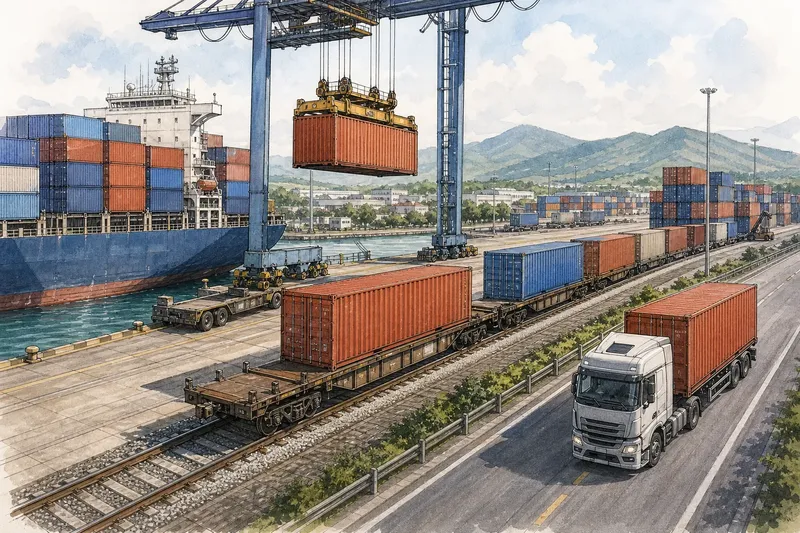
Containerisation later changed handling again, but it did not invent the port’s basic purpose. It intensified the demand for coordinated movement and altered how cargo could transfer between ships and inland transport. Each technology worked through enduring questions of access, labour, storage and connection.
Why did ports differ?
Why did some ports become major cities?
A port could attract settlement when it connected useful routes, provided reliable access and supported work beyond loading. Political power, local production and inland transport could reinforce that growth, while a good harbour alone was not enough.
What did a port do besides load ships?
Ports provided storage, repair, provisioning, brokerage, customs administration and access to market information. They could also serve passengers and local fishing, even when long-distance cargo trade was prominent.
Why did merchants use intermediaries?
Visitors often lacked local contacts and knowledge of customs, buyers and prices. Brokers and agents helped them interpret the market and arrange transactions, though their services added another relationship to manage.
Did new technology make older port functions obsolete?
Not necessarily. Steam, railways and later cargo-handling systems changed the scale and organisation of port work, but ports still needed access, coordination, storage and links to markets. Older activities could persist beside newer ones or shift to another part of the waterfront.
The port as institution
It is tempting to imagine a port as a fixed piece of geography, like a doorway cut into the coast. A more useful everyday analogy is a busy market hall: the building matters, but so do the rules, workers, contacts and routes that bring sellers and buyers into the same place.
That distinction helps explain trade history. A sheltered landing might serve a community for generations without becoming a major hub; a port could grow when authority, labour, storage and inland connections accumulated around it. Conversely, a change in routes or transport technology could weaken a port even if the harbour itself remained in place.
The history of ports is a history of changing relationships between shore and sea, local livelihoods and distant markets, private exchange and public authority. A harbour on a map tells only part of the story: the roads, warehouses and rules beyond the waterline help explain why that landing mattered.